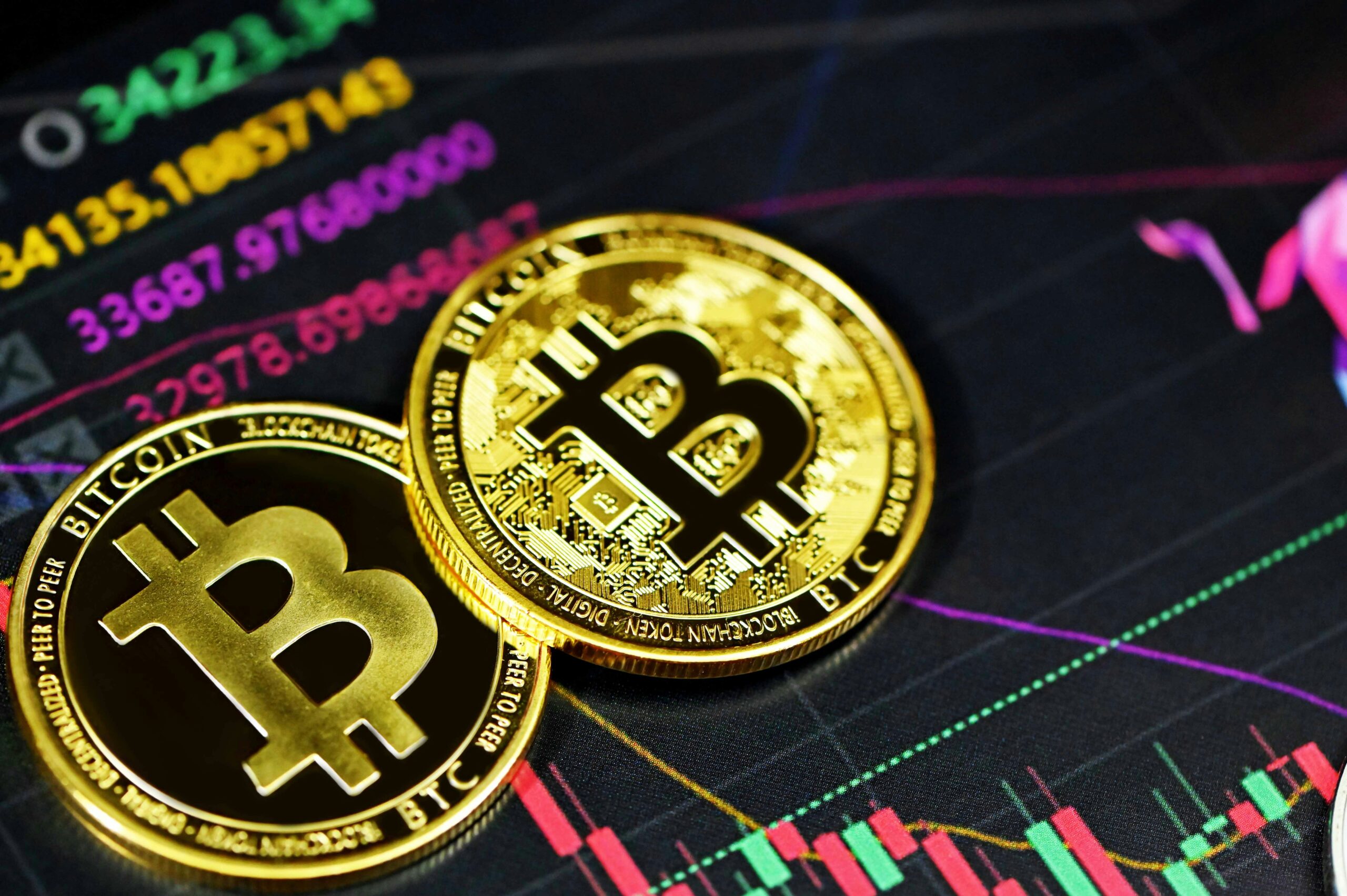
Crypto for beginners can feel overwhelming. You’ve heard the word “Bitcoin” a hundred times. Maybe a coworker mentioned they made money in crypto, or you saw a news headline about someone buying a pizza with digital coins back in 2010. But here you are, still wondering: what exactly is any of this, and should I care?
What is Bitcoin — And Why Does Everyone Keep Talking About It?
Bitcoin is digital money. It was created in 2009 by a mysterious person using the name Satoshi Nakamoto. You can learn more at Bitcoin.org — the official Bitcoin website.
Here’s the key idea: Bitcoin is money that no government, bank, or company controls. If you send someone Bitcoin, no bank can block it, freeze it, or charge you a $35 wire fee. It travels directly from you to them — peer to peer — anywhere in the world.
Simple Analogy
Think of Bitcoin like digital gold. Gold is valuable because it’s scarce, widely accepted, and hard to fake. Bitcoin works the same way — there will only ever be 21 million Bitcoins in existence. That hard cap on supply is coded into the system
and can’t be changed.
Bitcoin’s price changes constantly — sometimes dramatically. That’s what makes it exciting for some people and terrifying for others. But at its core, it’s simply a new kind of money
built for the internet age. Check our live crypto prices page for real-time updates.
What Is Blockchain — In Simple Terms?
Here’s where most beginners’ eyes glaze over. Don’t let that happen to you. Blockchain is actually a beautiful idea once you get it.
Simple Analogy
Imagine a Google Doc that thousands of people can see — but nobody can edit, delete, or rewind. Every transaction ever made is written into this shared document, one “block” at a time. Each block links to the one before it, forming a chain.
That’s a blockchain.
Why does that matter? Because it makes cheating nearly impossible. If someone tries to alter an old record, they’d have to change every block after it — while thousands of computers around the world are simultaneously checking the records.
The math required to pull that off is essentially impossible.
Key Properties of Blockchain
Blockchain isn’t just for crypto, Not sure about a crypto term? Check our crypto glossary for 50+ terms explained simply. It’s being used in supply chains, voting systems, healthcare records, and more. But crypto is its most famous application.
What Is Cryptocurrency — The Beginner’s Version
Cryptocurrency is a type of digital currency that lives on a blockchain. “Crypto” refers to the cryptography — the advanced math — that keeps it secure.
You can’t hold crypto in your hand. There’s no coin in your pocket. It’s all entries in a digital ledger. But it’s real — and it has real value because real people agree it does (which, honestly, is how all money works).
The dollar is valuable because people believe it’s valuable. Crypto works the same way — except instead of a government backing it, it’s backed by math and code.
Cryptocurrency can be used to buy things, send money internationally, earn yield, invest, or power entire applications. The use cases are growing every year.
How to Start Investing in Crypto — Step by Step
Okay, you’re curious and want to actually buy some. Here’s how to do it without fumbling around.
Educate yourself first (you’re already doing this!)
Never invest in something you don’t understand. Read, watch, ask
questions. This guide is a great start.
Choose a reputable exchange
Coinbase, Kraken, and Binance are among the most established platforms. Create an account, verify your identity (it’s legally required), and link a payment method.
Start small — only invest what you can afford to lose
Seriously. Crypto is volatile. Starting with $50–$100 is totally valid.
You’ll learn faster with real money on the line, but you won’t
be devastated if it drops.
Buy Bitcoin or Ethereum first
These are the most established, most liquid, and least likely to go to zero. Get comfortable here before exploring smaller coins.
Consider moving coins off the exchange
If you’re holding long-term, move your crypto to a personal wallet
(more on that below). “Not your keys, not your coins” is a popular
phrase in crypto — and it’s true.
Dollar-cost average (DCA)
Instead of buying all at once, invest a fxed amount
weekly or monthly. This smooths out volatility and
removes the pressure of timing the market.
What Is a Crypto Wallet — And How Do You
Use One?
A crypto wallet doesn’t actually “store” your coins. That’s a common misconception. Your coins always live on the blockchain. What a wallet stores is your private key — the
secret code that proves you own those coins and lets you spend them.
Simple Analogy
Think of your public wallet address like your email address — you share it so people can send you funds. Your private key is like your email password — you never share it with anyone, ever. Lose it, and your funds are gone forever.
Wallets come in different forms: apps on your phone, browser extensions, desktop so aware, or physical hardware devices. Each has tradeoffs between convenience and security.
Hot Wallet vs. Cold Wallet — What’s the
Difference?
This is one of the most important distinctions in crypto security.
Let’s break it down.
HOT WALLET (CONNECTED) | COLD WALLET (OFFLINE) |
▸ Connected to the internet | ▸Never connected to the internet |
▸ Convenient for daily use | ▸ Much harder to hack |
▸ Great for small amounts | ▸Costs $60–$200 upfront, but worth it |
▸Examples: MetaMask, Trust Wallet, Coinbase Wallet | ▸Best for large, long-term holdings |
▸Higher risk — if hacked, | ▸Examples: Ledger, Trezor (hardware devices) |
The general rule: use a hot wallet for spending, use a cold wallet for saving. Think of it like a checking account vs. a safe in your wall.
What Is Crypto Mining — And Is It Worth It?
When you hear “mining Bitcoin,” your brain might picture giant warehouses full of humming computers. And you’d be right. But why?
Mining is the process by which new Bitcoin transactions get verified and added to the blockchain. Miners are computers that compete to solve complex math puzzles. Whoever solves it first gets to add the next “block” of transactions — and earns newly created Bitcoin as a reward.
Simple Analogy
Imagine a massive Sudoku competition happening every 10 minutes. Thousands of computers race to finish first. The winner gets Bitcoin. Then the next round begins. That’s mining — except the “Sudoku” is cryptographic, and it intentionally gets harder as more miners join.
Is Mining Worth It for Regular People?
Honestly? For most people, no. Home mining is generally not profitable after you factor in electricity costs and hardware. Large-scale mining farms with cheap electricity dominate the market today.
That said, mining smaller, less competitive cryptocurrencies can still be viable for hobbyists. And understanding mining helps you understand why Bitcoin has value — it requires real world energy and resources to create.
What Is Staking — And How Do You Earn From It?
Staking is like putting your crypto in a high-yield savings account — except instead of a bank, you’re helping secure a blockchain network.
Some blockchains (like Ethereum, Solana, and Cardano) use a system called Proof of Stake instead of mining. Instead of burning electricity to validate transactions, they pick
validators based on how much crypto they’ve “staked” — essentially locked up as collateral.
In return for staking, you earn staking rewards — a percentage of newly created coins, kind of like interest. Annual yields typically range from 3% to 15%, depending on
the network.
How to Start Staking ?
▸ You can stake directly through exchanges like Coinbase or Kraken with just a few clicks.
▸ For more control and higher rewards, use dedicated staking platforms or stake directly through a crypto wallet.
▸ Always check lock-up periods — some staking requires your
funds to be locked for days or weeks.
Staking is generally considered lower-risk than trading, but you’re still exposed to the underlying coin’s price movements. If Ethereum drops 30%, your staking rewards won’t save you.
What Are Altcoins — Everything That Isn’t Bitcoin
Altcoins are simply any cryptocurrency that isn’t Bitcoin. The name comes from “alternative coins.” There are thousands of them — some serious, some silly, some somewhere in
between.
Major Categories of Altcoins
What Is DeFi — Decentralized Finance
Explained Simply
Imagine a bank that runs itself. No CEO, no customer service line, no 9-to-5 hours. Just code that automatically handles loans, interest, trading, and more — open to anyone with a
crypto wallet. That’s DeFi.
Decentralized Finance is a collection of fnancial services built on blockchain — primarily Ethereum. Using smart contracts (self-executing programs on the blockchain), DeFi
platforms can offer :
Simple Analogy
Traditional finance is like a restaurant — you have to apply, get approved, deal with staff, and follow their rules. DeFi is like a vending machine — open 24/7, no application needed, no one to call. You interact with it directly using code.
DeFi is exciting, but it comes with higher risk. Hacks, bugs in smart contracts, and rapidly changing protocols mean you need to do serious research before putting money in. It’s
powerful — but it’s not for complete beginners. Get comfortable with basic crypto first.
Frequently Asked Questions
Is crypto legal?
In most countries, yes — buying, selling, and holding cryptocurrency is legal. The regulations vary by country, and some (like China) have restrictions. In the US, UK, EU, Canada, and Australia, crypto is legal and taxed as property. Always check your local laws and report gains to your tax authority.
Can I lose all my money in crypto?
Yes, in theory. Crypto is highly volatile and speculative. A coin can lose 90% of its value — and some go to zero entirely. This is why you should only invest what you can genuinely afford to lose, stick to established coins at frst, and never put your emergency fund into crypto.
Do I have to buy a whole Bitcoin?
Absolutely not! Bitcoin is divisible to 8 decimal places. The smallest unit is called a “satoshi” (0.00000001 BTC). You can buy $10 worth of Bitcoin and own a fraction. Most exchanges let you buy any dollar amount you want.
What’s the difference between Bitcoin and Ethereum?
Bitcoin was designed primarily as digital money — a store of value. Ethereum is a programmable blockchain — it can run smart contracts and applications. Think of Bitcoin as digital gold and Ethereum as a digital computer. Both are valuable, but for different reasons.
How is crypto taxed?
In most countries, crypto is taxed as property. That means every time you sell, trade, or spend crypto — even swapping one coin for another — it’s a taxable event. Keep records of every transaction. Many people use tools like CoinTracker or Koinly to manage their crypto taxes automatically.
The Bottom Line — Crypto for Beginners
Crypto can feel overwhelming from the outside. But once you understand the core pieces — Bitcoin as digital money, blockchain as the ledger that records everything, wallets as
your key holder, and DeFi as banking without banks — the rest starts to click.
You don’t have to understand everything to get started. Most successful crypto investors began exactly where you are: curious, a little confused, and willing to learn. The best move
is to start small, keep learning, and never invest more than you can afford to lose. Browse our Learn Crypto guides for more beginner-friendly articles.
Ready to Take Your First Step?
Bookmark this guide, share it with a friend who’s been
asking about crypto, and start exploring. The best time to
learn was yesterday — the second best time is right now.
CRYPTO LOG
Educational content only · Not financial advice · Always do your own research
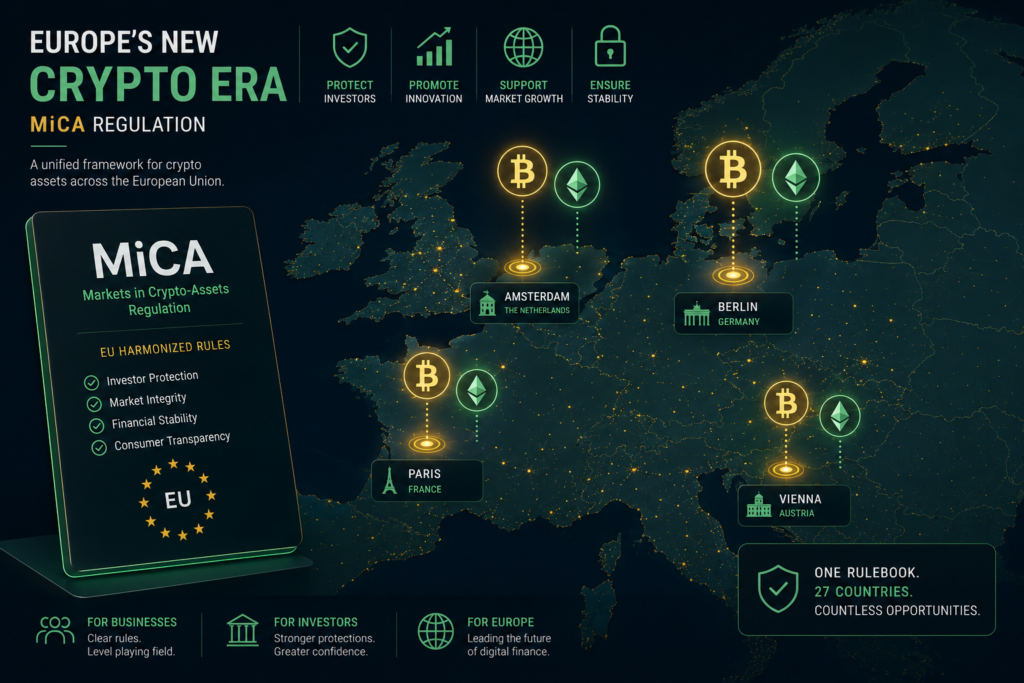

Pingback: Bitcoin Regulation 2026 — Clarity Act Passes | Crypto Log